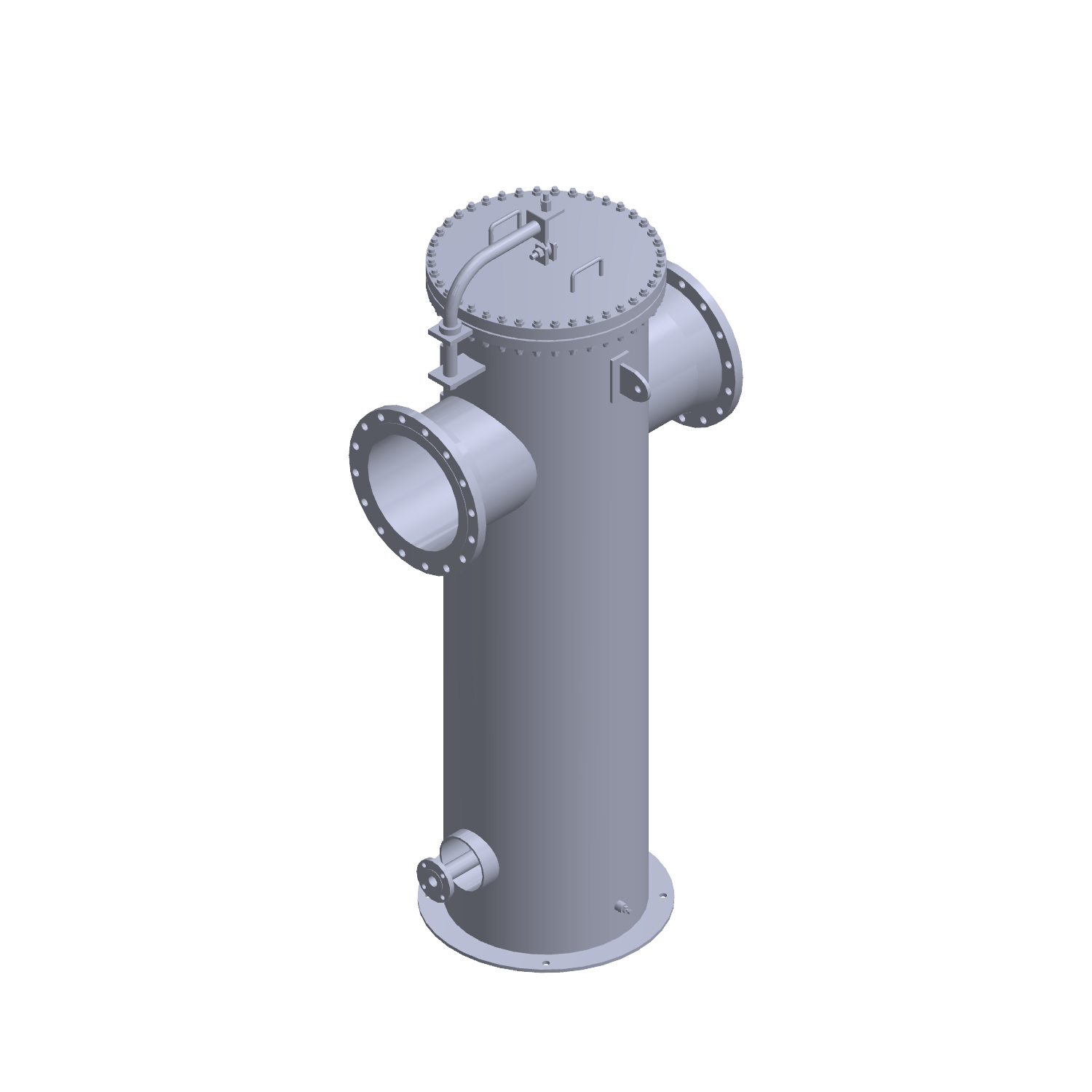
Yes, a properly engineered basket filter can help reduce pressure drop in high-flow process systems by providing sufficient filtration surface area, appropriate screen openings, and an efficient internal flow path. Its design allows process fluids to pass through the filtering element while retaining debris that could damage downstream equipment.
In oil and gas, petrochemical, power generation, and other industrial applications, maintaining consistent flow is essential for reliable operation. An undersized or incorrectly selected basket filter can create unnecessary resistance, particularly as contaminants accumulate.
The key to reducing pressure drop is selecting a basket filter that balances filtration efficiency, flow capacity, debris-holding capability, and maintenance requirements.
How Does Basket Filter Design Influence Pressure Drop?
Basket filter design affects the resistance encountered by the process fluid as it travels through the filter housing and straining element.
When fluid enters the housing, it passes through the basket before continuing downstream. The housing geometry, screen opening, available filtration area, and accumulated debris influence the resulting pressure difference.
Several design factors affect performance:
- Basket surface area and available open area.
- Perforation or mesh opening size.
- Housing and inlet-outlet geometry.
- Process flow rate and fluid viscosity.
- Expected contaminant quantity.
- Basket arrangement and internal flow distribution.
A correctly sized basket provides sufficient space for fluid to pass without unnecessary restriction. However, pressure drop cannot be eliminated entirely because filtration naturally introduces some resistance.
Why Is Filtration Surface Area Important in High-Flow Systems?
A larger effective filtration area allows fluid to pass through more screen openings, helping control resistance across the basket.
This is particularly important when selecting high flow basket filter elements for applications that handle substantial process-fluid volumes.
An adequately sized basket can provide:
- Greater available area for fluid passage.
- Improved capacity for collecting contaminants.
- Reduced risk of premature screen blockage.
- More stable flow between cleaning intervals.
- Greater flexibility when handling varying debris loads.
Does a Larger Basket Always Reduce Pressure Drop?
Not necessarily. Increasing the basket size may improve available filtration area, but performance also depends on screen design, fluid properties, housing geometry, and operating conditions.
The complete filter assembly must be evaluated rather than assuming that a larger basket will automatically deliver better results.
How Does Mesh Size Affect Flow Resistance?
Mesh size determines which particles are retained and how much open area remains available for the process fluid.
A finer mesh captures smaller contaminants but generally introduces greater resistance than a coarser screen of comparable construction.
Screen selection should consider:
- The smallest particle requiring removal.
- Contaminant type and concentration.
- Downstream equipment tolerance.
- Normal and maximum flow rates.
- Available screen open area.
- Acceptable clean and dirty pressure drop.
For example, industrial basket strainers for oil filtration may need to remove rust, scale, and other solid particles from hydrocarbon streams without unnecessarily restricting fluid movement.
Choosing the finest available mesh is not always appropriate. The filtration rating should match the protection requirements of the downstream equipment.
How Can Industrial Filter Baskets Support High-Flow Performance?
Industrial filter baskets are designed to retain solids while allowing the process fluid to continue through the system. Their construction influences filtration capacity, structural integrity, and maintenance frequency.
Important design considerations include:
- Sufficient basket area for the required flow.
- Suitable perforated or mesh-lined construction.
- Adequate structural strength.
- Compatibility with process temperature and pressure.
- Corrosion-resistant materials where required.
- Easy removal for cleaning and inspection.
For demanding applications, multiple-basket configurations can provide additional filtration capacity where a single-basket arrangement may be insufficient.
The appropriate arrangement depends on process conditions, available installation space, and expected contamination levels.
Can Multi-Basket and Duplex Designs Improve Process Efficiency?
Multi-basket and duplex configurations address different high-flow and maintenance requirements.
A multi-basket arrangement can provide additional filtration area within a suitably designed system. A duplex arrangement uses two filtration chambers and allows flow to be transferred between them so one basket can be serviced while the other remains operational.
These configurations can support:
- Increased filtration capacity where appropriately sized.
- More practical handling of demanding flow requirements.
- Scheduled basket cleaning.
- Reduced interruption during maintenance.
- Improved accessibility for inspection.
A duplex filter does not automatically guarantee a lower pressure drop. Its principal operational advantage is the ability to maintain filtration through an alternate chamber during maintenance.
Why Does Pressure Drop Increase as Contaminants Accumulate?
As debris collects on the basket surface, it gradually covers the screen openings and reduces the effective flow area.
This increases resistance and can affect downstream process performance.
Common indicators include:
- Increasing differential pressure.
- Reduced downstream flow.
- Frequent basket cleaning requirements.
- Changes in pump operating conditions.
- Visible contaminant accumulation during inspection.
How Can Operators Monitor Filter Performance?
Differential pressure monitoring provides a practical indication of increasing resistance across the basket filter.
Pressure connections installed upstream and downstream allow operators to compare inlet and outlet conditions. Cleaning limits should be established according to the filter design and process requirements.
The basket should be inspected for damage, deformation, corrosion, and blocked openings before being returned to service.
What Should Engineers Consider When Selecting a High-Flow Basket Filter?
The correct selection begins with understanding the complete operating requirements, not just pipeline diameter or nominal flow capacity.
Important considerations include:
- Normal and maximum flow rates.
- Process-fluid density and viscosity.
- Design pressure and temperature.
- Required filtration rating.
- Expected solids concentration.
- Permitted differential pressure.
- Basket material and construction.
- Maintenance access and available space.
For industrial process filters for oil and gas, filtration requirements may vary depending on whether the system handles crude oil, hydrocarbons, lubricating oil, or other process fluids.
Basket strainers are commonly used for removing larger solid contaminants. Applications requiring finer filtration may call for cartridge-type process filters or another configuration suited to the required particle retention.
The selected process filtration equipment should therefore reflect both the filtration objective and the flow conditions.
Conclusion
Basket filter design can help reduce pressure drop in high-flow systems when filtration area, screen openings, housing configuration, and operating conditions are correctly matched. A larger basket alone is not the solution. Effective performance requires balancing contaminant removal with acceptable flow resistance and routine maintenance.
SG INDUSTRIAL INC. offers cast and fabricated basket filters, including single and multi-basket configurations for demanding industrial applications.
Explore its Basket Filters & Strainers to identify a suitable configuration for your process requirements.
Yes. A correctly sized basket filter with sufficient filtration area and suitable screen openings can help minimize unnecessary pressure loss. Actual performance depends on flow rate, fluid properties, filter geometry, and contaminant accumulation.
High flow basket filter elements provide sufficient filtration surface area to accommodate larger process-fluid volumes while retaining the required particles. Screen construction, effective open area, structural strength, and debris capacity influence their performance.
Yes. Industrial basket strainers for oil filtration capture rust, scale, debris, and other solid contaminants in oil and hydrocarbon systems. The appropriate screen and construction material should be selected according to the fluid and operating conditions.
Increasing differential pressure, reduced downstream flow, or a scheduled inspection may indicate that cleaning is required. The filter must be safely isolated and depressurized before the basket is removed.
A duplex basket filter allows operators to transfer flow between two chambers so one basket can be cleaned while the other remains operational. It is particularly useful where interrupting process flow for routine filtration maintenance is undesirable.
Recent Comments